
A1clarify
📘 Textbook⚡ OffBook
Wie? Nochmal, bitte.
You will need this 50 times a day at B1. „Nochmal, bitte" is not rude — it is efficient.
Textbook vs. Real German
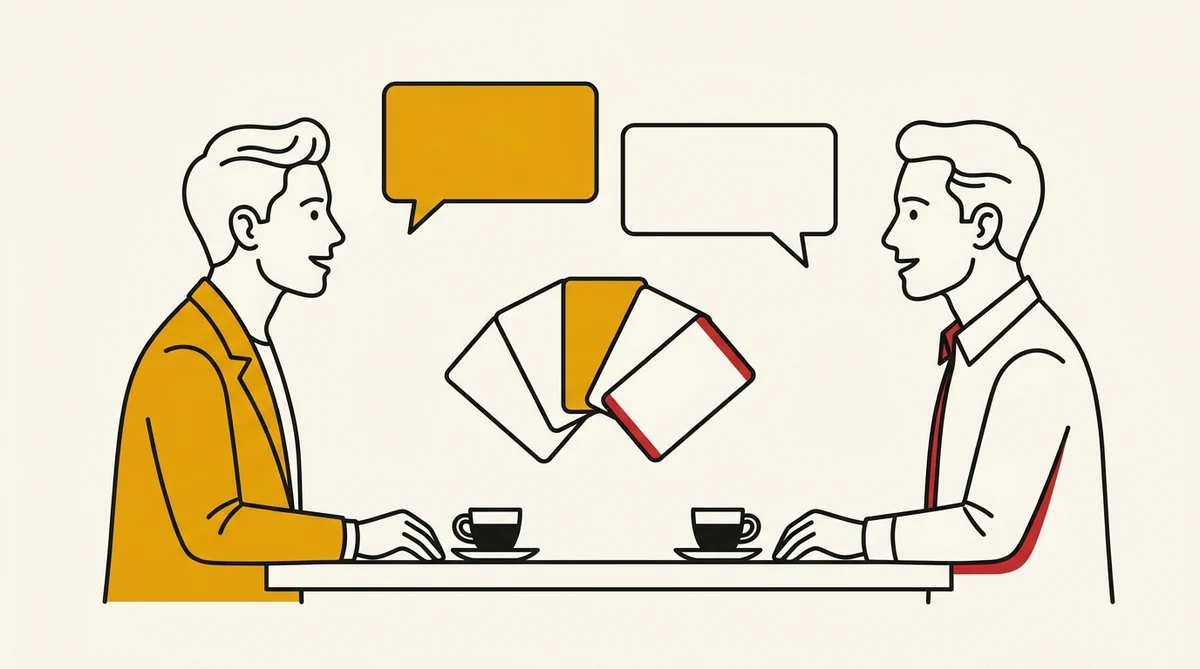
The OffBook toggle is on every card: left = school German, right = what Germans actually say — both with native audio.
Wie? Nochmal, bitte.
You will need this 50 times a day at B1. „Nochmal, bitte" is not rude — it is efficient.
Say what? / Hä?
„Hä?" is rude among strangers, but among friends it is the real answer. Middle ground: „Wie bitte?"
Wo ist der Bahnhof?
Locals compress. But the A1 full sentence is what strangers will answer kindly.
Tschüss / Ciao!
"Tschüss" is the default goodbye everywhere except official offices.
Danke für die Einladung!
The real trap is accepting German invitations: bring flowers for the hostess or something to drink — arriving empty-handed is noticed.
Danke für die Hilfe!
Between people you know, short and warm wins.
Zahlen, bitte!
What you actually call out to the waiter. Short, direct, completely normal.
Schade! / Oh nein.
„Schade" is the emotional swiss knife: mild disappointment, sympathy, bad weather, cancelled plans.
Sorry, der Zug hat mal wieder nicht gezogen.
Germans blame die Deutsche Bahn reflexively — instant forgiveness. "Sorry" is fully accepted German now.
Springt es nicht / schaffe ich nicht.
„Leider" is doing all the work. Friends often just say „Schaffe ich heute nicht, sorry".
Kannst du kurz was für mich machen?
Between friends, direct is fine. „Kurz" signals it won't take long — the magic word.
Sorry, kurz:
„Sorry" is a full German word now. Officials still melt slightly for „Entschuldigen Sie".
Hast du kurz Zeit?
„Kurz" again — Germans respect time boundaries, so name the cost of the ask.
Keine Ahnung / kein Plan.
„Überfragt" literally means over-questioned. „Kein Plan" is the youth standard — a plan you don't have.
Sag mal, kurz was:
"Sag mal" is the universal opener among friends and even friendly strangers.
Weiß nicht… bin nicht sicher.
Germans disagree directly: „Das sehe ich anders." Being too soft sounds like you have no opinion.
Melde dich!
Written German loves „Ich freue mich auf Ihre Rückmeldung" — but in chat you just say „Melde dich".
Was meinst du / Wie siehst du das?
du-version for peers; "Wie siehst du das?" is the natural one.
Bin mal gespannt.
Gespannt = tensioned, curious. Germans say it constantly about everything uncertain.
Kurz zu mir:
Presentations in German start with „Kurz zu mir" — efficient, expected, zero ceremony.
Können wir einen Termin machen?
Perfectly fine but stiff. The everyday version is plainer.
Da bin ich falsch verbunden.
What you will actually hear at every Amt — and its offbook cousin: „Falsch verbunden" = wrong office, go elsewhere.
Nur um sicherzugehen:
Real usage: „Nur damit ich das richtig verstehe: …" — people restate, they don't hedge.
Siehst du ganz anders / nö.
For real debate register: „Da widerspreche ich dir" is acceptable in German TV debates — shocking elsewhere.
Kannst du mir kurz helfen mit…?
Konjunktiv II stacked three levels deep. Real people keep one polite layer, not three.
Das passt für mich.
Real Germans in meetings say far less. Over-formal speech sounds like a tourist phrasebook.